
By Ashley Stender | December 15, 2025
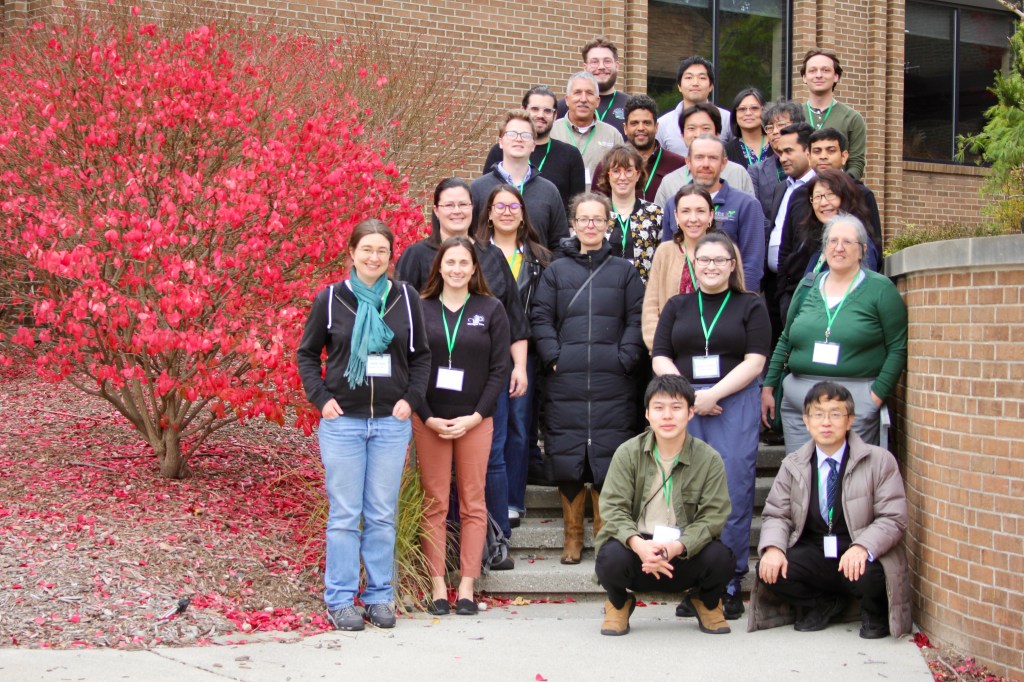
As C-SPIRIT advances its research pipeline toward delivering bioactive natural products for real agricultural systems, the center turned to its stakeholder board for guidance and insight at its inaugural Stakeholder Board Annual Summit, held this past November. With more than 50 attendees at the Henry Center in Lansing, Michigan and via Zoom, this summit provided research teams an invaluable opportunity to share and reflect on C-SPIRIT’s first year of research, solicit stakeholder board feedback, and discuss future directions. C-SPIRIT’s stakeholder board was assembled for this purpose: to bring together farmers, industry leaders, extension agents, scientists, and commodity groups to identify key vulnerabilities impacting the acceptability of bioactive compounds in agriculture.
Across the day-and-a-half event, participants listened to and discussed presentations on each of the research aims’ current work, engaged in vulnerability mapping, and brainstormed ideas for engaging with stakeholders. In her opening remarks, Broader Impacts Team lead Molly Sears emphasized that the summit was not only a moment to reflect on year-one progress, but also an opportunity to strengthen connections across the project and begin building the trust, relationships, and shared understanding that responsible innovation requires.
Connecting Science to Practice
The summit kicked off with research presentations from each of C-SPIRIT’s aims with built-in discussion time between talks. This session was designed to give both Stakeholder Board members and participants a clear picture of C-SPIRIT’s research pipeline as well as what each aim is currently working on. Researchers shared recent progress on metabolite discovery and annotation pipelines, gene and pathway discovery efforts, biological synthesis strategies, and early work on field and toxicity testing.
These presentations served as more than updates – they created space for participants to react in the moment, allowing them to ask questions and discuss how to connect early science to the practical demands of production and regulation. For example, Stakeholder Board members emphasized the long and costly pathway between a promising discovery and a registered product. They also shared about the realities farmers face, noting that growers care most about predictable benefits under moderate yet yield-limiting stress rather than under extreme scenarios. There was strong interest from attendees in concentrating early field trials on realistic agricultural stresses such as drought spells, frost events, and disease pressure under fluctuating moisture. Participants also highlighted opportunities to anticipate public questions around safety, trade-offs, and uncertainty long before anything reaches the market.
“Every time you go through the field, there’s soil compaction, there’s cost of the equipment, there’s damage to the plants from the tractor, the spray equipment, etc, so the fewer times you can go through, or if you can combine it with something, the better for the farmer.”
– Linda Hanson, USDA-ARS Plant Pathologist & Adjunct Professor within the Department of Plant, Soil, & Microbial Sciences at Michigan State University
“Do you expect to get more discoveries from extreme conditions… rather than plants grown in their normal regions?”
– Brook Wilke, Associate Director for Science and Agronomy within the Kellogg Biological Station Long-Term Agroecosystem Research at Michigan State University
This research presentation session underscored that while science is advancing quickly, its value will depend on how well the work stays grounded in real production systems and shaped by the people who understand those systems best. As C-SPIRIT moves forward, researchers must think about where growers actually struggle, what stresses limit yield in typical years, and how new tools would need to perform to earn a place in a farmer’s program.


Trust, Responsibility, and Shared Vulnerabilities
Wednesday afternoon began with a presentation from Dr. Joe Hamm, who introduced research on trust, risk perception, and how communities evaluate new technologies in agriculture. His talk provided a shared language for thinking about what shapes trust and why communication must begin early, especially when science is evolving. This framing set up the session that followed, which focused on responsibility and vulnerability across the broader system that would need to function for any new bioactive natural product to succeed.
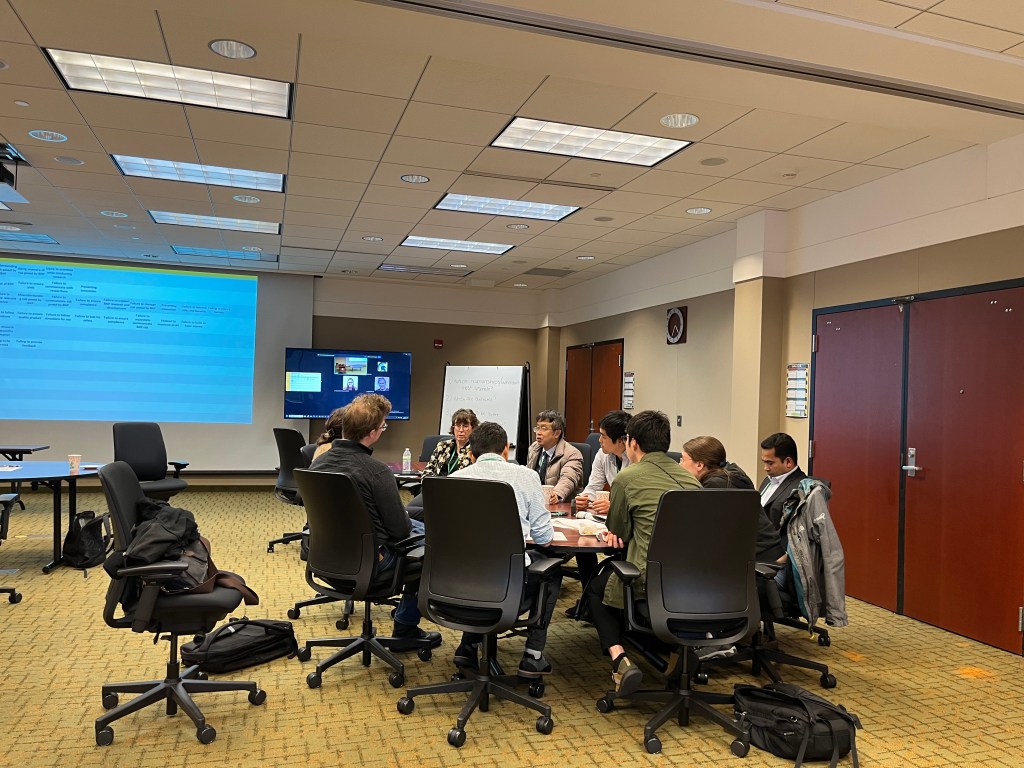
Participants worked in mixed groups to map the actors involved in moving a discovery from the laboratory to public use and to identify the pressures each group faces. Key players identified included researchers, producers, industry partners, regulators, extension advisors, and consumer or public audiences. Although the exercise was not meant to produce an exhaustive list, clear patterns emerged:
- Researchers face uncertainty, funding pressures, and the temptation to overinterpret early signals.
- Producers operate on tight margins and have limited tolerance for products that add cost or complexity.
- Industry partners must navigate expensive development pipelines and regulatory hurdles.
- Regulators work within agencies that are often understaffed.
- Extension advisors balance credibility with the challenge of staying current on emerging tools.
- Consumers often receive information through channels that may not emphasize scientific evidence.
“People don’t only watch or read the news these days, they also use influencers and other types of social media to get information.”
– Katherine Rivera-Zuluaga, Postdoctoral Scholar within the Rhee Lab at Michigan State University
“Expense is a big, big factor for farmers’ solutions, and that needs to be taken into consideration.”
– Gaurav Moghe, Associate Professor within the School of Integrative Plant Science at Cornell University
What emerged was a shared recognition that each group faces real constraints, and that bringing a new technology into agriculture requires understanding how those vulnerabilities interact.
Opportunities were identified as well. Participants stressed the importance of working closely with advisors and extension educators who already have strong relationships with growers, since these groups understand day-to-day constraints better than anyone. There was also agreement that communication should focus on clarity and transparency rather than early promotion, and that C-SPIRIT should be proactive about discussing uncertainty, limitations, and realistic expectations.

Shaping C-SPIRIT’s Stakeholder Engagement Strategy
The second day of the 2025 C-SPIRIT Stakeholder Board Annual Summit was dedicated to a hands-on workshop that asked participants to consider how C-SPIRIT should engage with stakeholders in the next year. Working in small groups, participants identified which stakeholder communities should be prioritized in the near future and how those groups prefer to engage with research projects. As conversations unfolded, people shared experiences from their own work, giving the room a grounded sense of what makes engagement efforts succeed or fall short.
Three different types of stakeholder communities were identified as critical to engage with at this point:
- Advisors and technical specialists such as extension educators, private crop consultants, and others who translate science into practice.
- Farmer and commodity organizations, which can help clarify which stresses and production challenges matter most across cropping systems.
- Industry partners, including biologicals companies and food brands, who understand formulation, regulatory pathways, scalability, and market fit.
Participants also discussed the most effective ways for C-SPIRIT to engage stakeholders and highlighted the importance of working closely with advisors and extension educators who already have trusted relationships with growers. Many also emphasized meeting farmers and advisors at events such as agribusiness meetings, field days, and grower conferences. Stakeholder Board members suggested that industry engagement should center on feasibility, scalability, cost, and comparison with existing products. Participants also agreed on the importance of being transparent about the stage of the research and avoiding premature public messaging before the science is ready. Overall, the discussion highlighted that meaningful progress will depend on involving stakeholders as research partners who help steer questions, priorities, and expectations.
“There’s obviously a sort of slightly tense relationship between academia and industry in this regard… about who kind of does the invention and who then ends up making money from it.”
– Simon Williams, Principal Scientist of Research Chemistry at Syngenta Crop Protection
“Part of that extension we talked about was how the people who actually provide seed often can be larger companies or biotech companies. And when we do attend conferences, we can intentionally have our own C-SPIRIT booth and leverage our existing network… We can see who we know who’s going to be somewhere.”
– Nicholas Schlecht, Postdoctoral Scholar within the Skirycz Lab at Michigan State University
The workshop closed with a discussion about how to use the Stakeholder Board itself. Board members recommended shifting from frequent, broad meetings to fewer but more focused sessions, supported by targeted small-group conversations organized around specific needs or sectors. They also expressed interest in providing input earlier in the research cycle. This guidance is shaping how C-SPIRIT will structure its engagement with the board in its second year.


Looking Ahead: Turning Insights into Direction
The 2025 C-SPIRIT Stakeholder Board Annual Summit made clear that scientific progress and responsible innovation must advance together. Over a day and a half, research teams and Stakeholder Board members developed a shared view of what success will require. Discovery work should stay focused on a manageable set of promising candidates. Experiments and field trials should reflect the stresses that matter most to growers. Advisors, commodity groups, and industry partners should be involved upstream so that research questions reflect real constraints and opportunities. And communication should emphasize clarity and evidence rather than early promotion.
In the months ahead, C-SPIRIT will act on the feedback and guidance shared at the Summit. The team will organize targeted conversations with Board members, plan for engagement at grower and agribusiness events in 2026, and align aim-level work plans with the stakeholder priorities raised during the summit. C-SPIRIT will also return to the Board regularly with updates and questions so that feedback can continue to shape decisions as the science moves forward.
The Summit brought together the people discovering new bioactive compounds with the people who will eventually use, regulate, and evaluate them. It surfaced vulnerabilities openly and translated them into a shared agenda for action. Most importantly, it reinforced that C-SPIRIT’s path from lab bench to farm field will only succeed if scientific progress and stakeholder engagement continue to advance together.
 C-SPIRIT