
Aim 5: Lab & Field Testing
Our research tests how bioactive compounds can enhance plant resilience to environmental stresses and control pests like nematodes. By conducting both lab-based and field trials, we aim to optimize these compounds for real-world agricultural applications on key crops, including corn, soybean, potato, rice, and pennycress.
Research Goals & Approach
1. Laboratory Trials for Initial Screening
In controlled laboratory settings, we evaluate the effects of selected bioactive compounds on plant resilience to drought, heat, nutrient deficiencies, and pathogen challenges. Using hydroponic systems developed in the Rhee lab, we grow corn, rice, and pennycress seedlings for two weeks under optimal conditions before introducing stresses such as polyethylene glycol (a drought proxy), salicylic acid, flagellin 22, and jasmonic acid. Heat stress is simulated by raising the temperature to 28°C and 35°C. The compounds are tested for their impact on biomass accumulation, carbon assimilation, photosynthetic efficiency, and nutrient uptake. Advanced analytical tools, including high-pressure ion chromatography and microwave-plasma atomic emission spectrometry, quantify nutrient accumulation, while RNA sequencing provides insights into gene expression changes. This integrated analysis identifies compounds that enhance growth and resilience under various stressors, narrowing down candidates for field testing.
2. Field Trials for Practical Applications
Compounds demonstrating promising results in laboratory tests are advanced to field trials conducted at research farms managed by South Dakota State University and Michigan State University. These trials evaluate the efficacy of the compounds in improving drought tolerance and stress resilience in crops such as corn, soybean, and potato under real farming conditions. Trials are conducted in various cropping systems, including rotations with high-value commodities like potatoes. Experimental designs, such as randomized block arrangements, ensure rigorous data collection and statistical validation of yield, biomass, and grain quality outcomes. Collaborations with local farmers, agronomists, and plant scientists facilitate practical implementation, while farmer feedback ensures the adoption potential of these novel solutions. Customized formulations and application methods, including soil, seed, and foliar treatments, optimize the compounds’ effectiveness across diverse environmental conditions.
3. Pest Control Testing
For nematode control, compounds are tested in laboratory, greenhouse, and micro-plot trials against key pests like soybean cyst nematodes and root-knot nematodes. Initial laboratory trials use petri dishes and agar to test compound effectiveness on nematode survival and activity. Greenhouse and micro-plot experiments involve inoculating field soil with nematodes and applying the compounds to crops, focusing on pest reduction and yield improvements, particularly in potatoes. Advanced diagnostic tools assess the impact of these treatments on nematode populations and crop performance. These trials integrate findings from the Center to explore the compounds’ potential in creating resilient cropping systems while reducing dependency on conventional nematicides. Results from these efforts support scalable, sustainable pest management strategies aligned with modern agricultural practices.
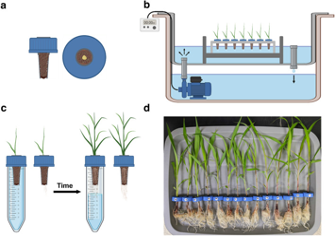
An example of a chemical testing set-up designed for corn, rice, pennycress, and soybean.
Outcomes & Impact
Through lab and field trials, our research will validate the effectiveness of bioactive compounds in enhancing crop resilience and pest control. This work will enable us to adapt these compounds for diverse agricultural settings, creating climate-resilient and sustainable farming practices. Farmer feedback and real-world data collection will inform broader adoption, supporting global food security and sustainable agriculture.
 C-SPIRIT