
By Ashley Stender | July 30, 2026
C-SPIRIT’s work depends on moving discoveries across teams. A promising compound, extract, or stress-response signal identified in one part of the center must become evidence another team can use. Before a candidate advances, researchers need to know what it is, how it works, whether its effect can be reproduced, and whether it matters in a specific crop.
The center organizes that work through two connected pipeline structures. Its overall research pipeline spans six aims: metabolite discovery, metabolite and compound annotation, gene and pathway discovery, biological synthesis, crop validation and field testing, and safety assessment. Its crop-specific pipelines bring that work together for cassava, maize, pennycress, potato, rice, soybean, and tomato.
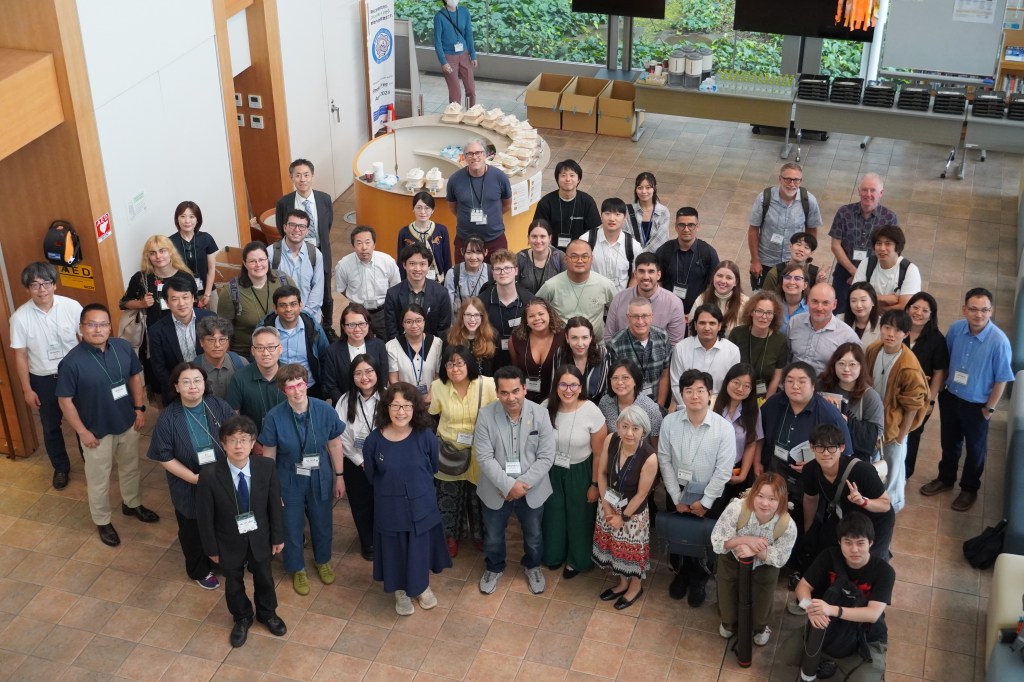
The 2026 C-SPIRIT All-Hands Meeting, held July 2 and 3 at the RIKEN Yokohama Campus in Japan and via Zoom, focused on strengthening those connections. Seventy-four researchers, trainees, and staff representing five countries gathered to refine how discoveries across C-SPIRIT can guide each crop team’s next decisions.
Deciding What Deserves the Next Experiment
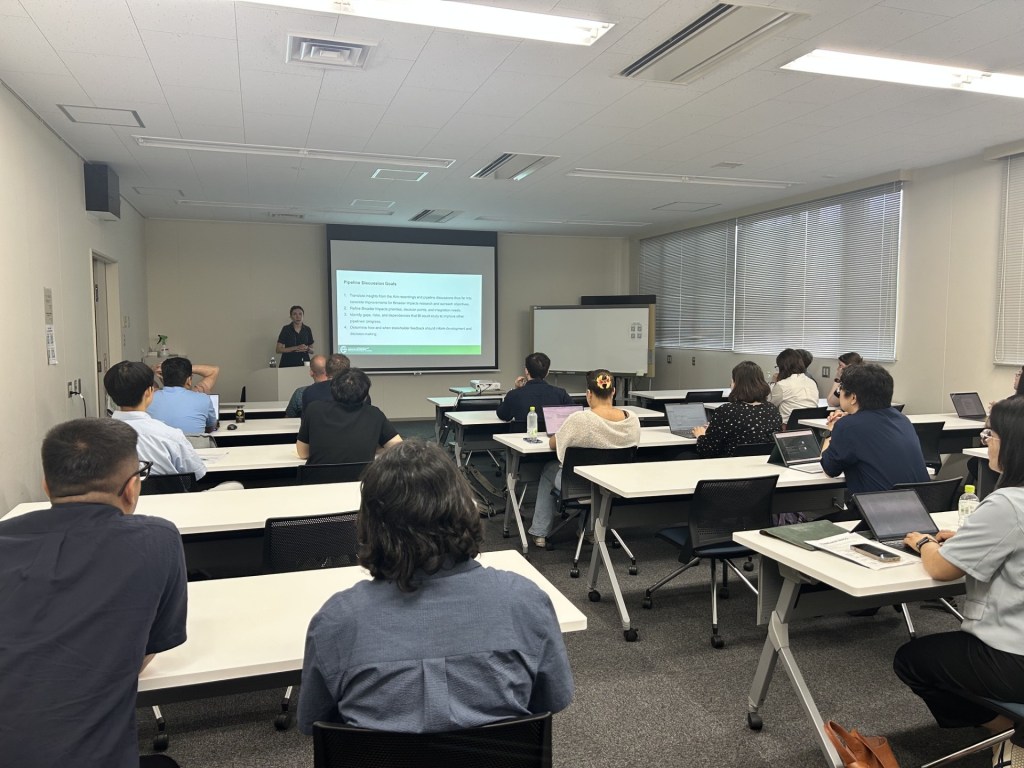
The concurrent working sessions gave participants time to move beyond pipeline diagrams and ask what each crop team needs before promising candidates advance. Groups focused on crop pipelines alongside the High-Throughput Screening Pipeline Group and the Broader Impacts Group, connecting early discovery with downstream validation, stakeholder input, and future use.
Several discussions centered on making results more comparable and actionable across teams. Soybean and rice groups focused on shared reference materials, coordinated treatments, and consistent sampling so data from different laboratories can support common decisions. Maize researchers balanced ongoing field trials with greenhouse optimization of ethanol and abscisic acid, or ABA, treatments. Cassava discussions emphasized field demonstrations and engagement with growers, processors, and communities in cassava-producing regions.
Together, the sessions returned to a shared question: what evidence is strong enough to justify the next stage of testing? This question will help guide how C-SPIRIT teams prioritize candidates, standardize experiments, and bring stakeholder perspectives into crop-specific decisions.
Evidence Behind the Decisions
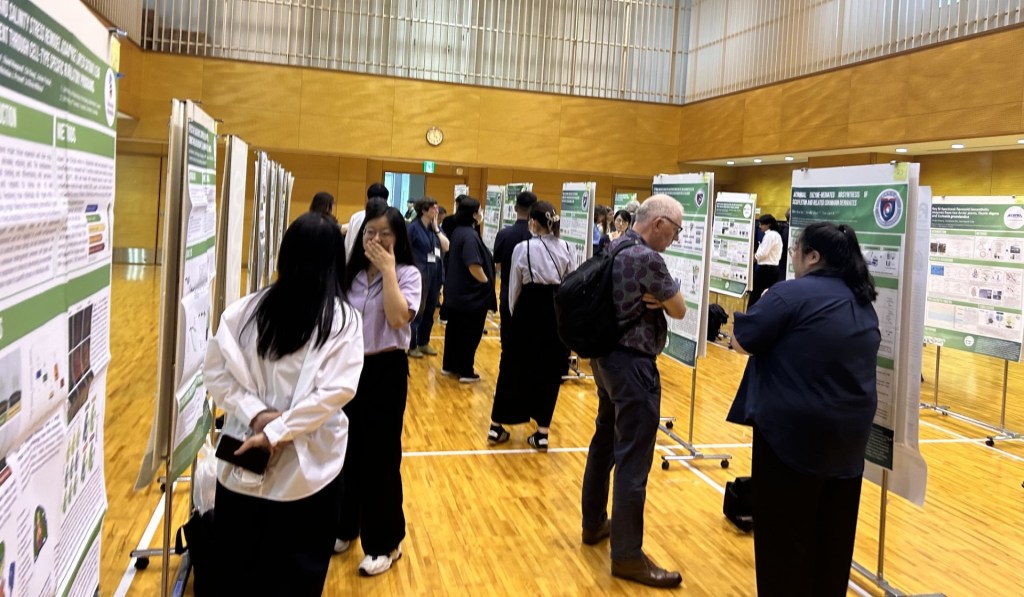
Forty-two posters, including one virtual presentation, showed how supporting evidence is emerging across discovery, annotation, crop physiology, artificial intelligence, field testing, social science, and technology transfer.
Some posters introduced possible candidates. Others offered ways to test them, explain their effects, or connect them to crop performance. Natural product screens can identify compounds worth investigating. Metabolomics and physiology can show whether a candidate changes plant responses under stress. Computational tools can connect genes, metabolites, and traits. Field studies can reveal whether an effect observed under controlled conditions persists in more variable environments.
Kathe Rivera-Zuluaga’s first-place poster titled “High-throughput discovery of natural bioactive compounds that enhance plant resilience to fungal pathogens” made that handoff visible. Her research used high-throughput screening to identify natural bioactive compounds that may strengthen plant resilience to fungal pathogens. The screen can reveal promising candidates, but crop teams still need to decide which compounds warrant validation, which assays can test them, and what results would justify larger studies.
2026 Poster Award Recipients
First Place
Kathe Rivera-Zuluaga
Second Place (Three-Way Tie)
Bri Hashim, Danielle Hoffmann, and Shogo Kuwayama
Honorable Mentions
Toon Suzuki, Jayram Karmacharya, Min-Su Kim, and Hirotake Yamaguchi
For trainees, the session created a space to test ideas with researchers outside their immediate disciplines and see where their work fits in the broader C-SPIRIT effort.
Planning Early for Practical Use
A candidate can show biological promise and still stall before practical use. Intellectual property, production, regulation, market need, and public acceptance can all affect whether further development is realistic.
During a commercialization session, Julia Miller, Hiroshi Ezura, and Motoaki Seki discussed invention disclosure, intellectual property review, translational development, partner identification, and licensing. Researchers were encouraged to contact technology transfer offices before publicly presenting or publishing potentially patentable work, since public disclosure can affect patent rights in many countries.
The discussion also broadened the idea of a C-SPIRIT innovation. Research may lead to compounds or formulations, but potential outputs can also include microbes, plant traits, software, datasets, and research tools. Case studies involving a gene-edited tomato with elevated gamma-aminobutyric acid, or GABA, and an ethanol-based approach to stress tolerance showed how scientific results interact with regulatory requirements, production methods, patent strategy, and public acceptance.
Collaboration Across Five Countries
Crop pipelines depend on people, materials, and methods moving across institutions. A candidate identified in one lab may require further research in other C-SPIRIT aims before its value becomes clear.
A session on the visiting scientist exchange program treated research visits as part of that infrastructure. Productive exchanges require defined projects, early planning, visa preparation, safety training, material transfer agreements, shipping, and housing. Participants were encouraged to begin planning at least six months in advance so visits can support real experiments rather than last-minute logistics.
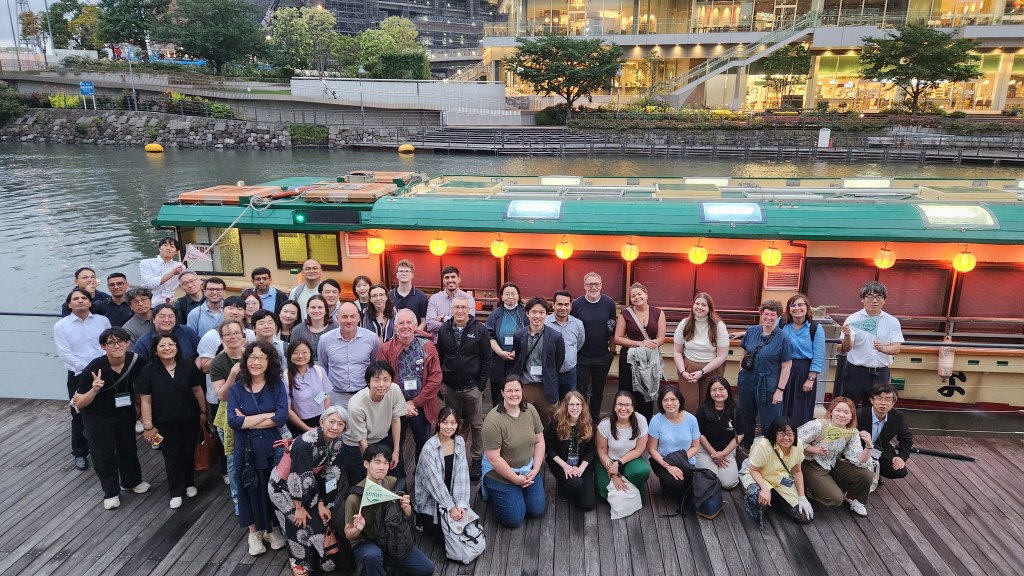
Poster conversations, networking lunches, and dinner aboard the Yakatabune Suzuyoshi riverboat gave members time to compare methods, discuss shared questions, and develop new or continuing partnerships. Zoom participation kept colleagues who could not travel involved in the working groups and report-outs.
The Work Ahead
The 2026 C-SPIRIT All-Hands Meeting in Yokohama left teams with a clearer test for the year ahead: turn pipeline diagrams and discussion notes into decisions that shape experiments. Crop teams will refine decision trees, standardize assays, narrow candidate lists and plan field demonstrations, while bringing stakeholder input and technology transfer guidance into the process earlier. The next phase will depend on how well those choices help researchers identify candidates with enough evidence to move forward.
For the broader plant science and agriculture community, that work addresses a shared challenge: turning promising lab discoveries into evidence-based, field-relevant tools for crop resilience. By clarifying what counts as sufficient evidence, C-SPIRIT can help model a more coordinated path for moving discoveries toward agricultural application.
When C-SPIRIT meets again in South Korea in 2027, the value of the Yokohama meeting should be visible in the work itself: candidates backed by stronger data, comparable experiments across laboratories, crop decisions informed by stakeholder perspectives, and collaborations that have generated shared results.
Those outcomes will show which ideas are ready to advance and which questions C-SPIRIT still needs to answer as it works toward sustainable approaches to crop resilience
 C-SPIRIT